Backward Look At The Top Three Distortion Pedals Reviewed
This is a look at distortion pedals and we have the top three distortion pedals reviewed right here. These pedals could never be thought of as new kids on the block, but it doesn"t mean that they are any less powerful. Let"s see what comes up.
[amazon table="13999"]
Okay, first up is a review about the Boss SD-1 Super Overdrive pedal. Our very own Gary Clinton from GMI has also carried out a demo video of the pedal which you can see further down this article.
Boss SD-1 Review (2018)
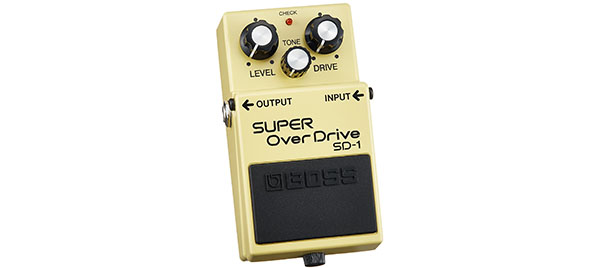
You know that awesome rock ‘n’ roll guitar tone you get when you crank a tube amp up to 11? Well, that is very much the focal point of the Boss beast known as SD-1. As the name indicates, this stompbox creates the sound you get when you kick overdrive into high gear.
It’s affordable and has all the features of standard Boss pedals, meaning sturdiness, reliability and quality tone. There’s a few things to discuss about this fella, let’s dive right in!
Packed in a light green casing, this item is actually quite basic. It offers only the essential controls, but still secures a lot of sonic versatility and space to maneuver your sound into a variety of directions.
As is often the case with Boss pedals, we are looking at a single In jack, one Out jack, a LED status indicator, and a large on/off foot-switch. The device can be run through a single 9V battery or via standard power adapter, none of which are included in the price.
As noted, the device packs just the essentials. However, each of the knobs is very accurate and precise, allowing you to dial in any type of tone from light drive to full-on roar. In total, we have three knobs: Level, Tone, and Drive.
Level – This knob sets the amount of overdrive effect that gets injected into your audio output. The more you crank it up, the more overdrive and less clean guitar signal you will get in the final audio mix.
Tone – This one determines the character and brightness of the OD effect. The more you dial in, the darker and more bass-driven your sound becomes; and vice-versa, lower values secure a more bright and dry tone.
Drive – This one is crucial as it adjusts the level of gain and drive. It is through this knob that you will determine whether you want just a pinch of gain or a full-blown tube OD boost.
One of the things we particularly like about this pedal is how nicely it emulates the tube vibe. For example, the level of drive can be affected by the way you pick and strum your guitar, which is exactly how tube overdrive operates. But even without those details, the tone is high-quality stuff with plenty of versatility, a great value for the listed price.
For example, we’ve seen church players using this device for attaining just that minimal drive effect. On the other hand, we’ve also seen rockers cranking this one up to 11 and rock out ion style. Within the listed price range, this is one of the champs.
Overall, this is a top-notch overdrive pedal if you need versatility and solid sound at a fair price. This is not just a beginner stompbox, it’s much more than that, and we thoroughly recommend checking it out. It’s easy to get a grasp of this fella’s capabilities and overall vibe in a short time period, meaning you’ll get a pretty clear image from the get-go on whether or not this is the pedal for you.
read more at guitarfella.com
Okay, well that"s the Boss SD1 Super Overdrive. Next up is something similar but different for those that love that British rock sound.
[amazon table="13999"]
Marshall Bluesbreaker 2
[amazon table="13999"]
Next up is a Marshall pedal. Marshall are obviously well known for their amps and cabs, but how many people know much about their pedals? Well, here is a review of the Marshall Bluesbreaker 2. You can view Gary Clinton"s detailed video on the pedal lower on this page.
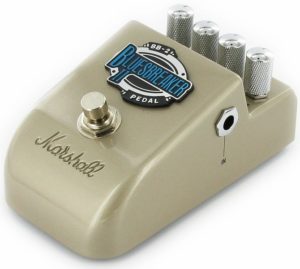
Many has been written and said about vintage guitar gear and pedals. As a guitarist who tries a lot of gear, I am still in the ever lasting quest to find the best tone for my guitar. During this quest for tone I have found one of the better pedals out there which is highly underrated: the Marshall Bluesbreaker 2.
The Marshall pedals have been somewhat underrated during the last couple of years. During the early years of the Marshall pedals, this was exactly the same. When the Bluesbreaker I pedal came out, there wasn’t much interest. This only increased when this series of pedals (say, from around 1992) became “vintage”, somewhere between 2007 en 2017. So, I have concluded that the Bluesbreaker 2 is a different pedal than the original, but is a winner too. In 10 to 15 years people will again seek out for this quite affordable pedal.
Now, the marshall Bluesbreaker I is the vintage pedal that I am referring to. I have tried this pedal in 2015 and it’s a great pedal. However, for my “line of work” it wasn’t aggressive enough and the volume and tone were somewhat too low for me. The BB2 pedal is a bit more agressive. The original Marshall Bluesbreaker is from the 1990’s and sadly is no longer in production. Prices on eBay are sky high and therefore the BB2 seemed to be a more affordable alternative.
Blues Breaker I pedal
At the date of writing this post, prices vary from 200 to 300 euro on various on line market places. My guess is that the pedal, when it first came out, was not highly expensive. At least, not as expensive as it is now. Given the fact that I still want one, I decided to try the budget option first, being the Blues Breaker 2 (BB-2). It was relatively inexpensive and my thoughts were that Marshall is not completely stupid: the BB-2 would have to be a better pedal than the BB-1. (I am still unsure, so once I buy one, I will post a comparison.). The BB-1 is the choice of various artists such as John Mayer.
But, this post is about the BB-2 pedal. Marshall says the following:
“The Bluesbreaker II takes the philosophy of our original Bluesbreaker pedal one step further by adding two modes, Blues and Boost, effectively making it two pedals in one. Boost mode is designed with the vintage valve amp or ‘tone purist’ player in mind, for when you don’t want to alter the tone of your amp at all, but want to drive the front end harder to push the amp further into natural overdrive.”
“The Boost mode features a clean boost controlled by the pedal’s volume control, which will not affect your original tone. It can also be used for boosting the signal which can sometimes be lost when using long leads (particularly with single coil pick-ups). Blues mode is reminiscent of the tonal and distortion characteristics of our non Master Volume amps, such as the classic Bluesbreaker combo from the 1960s. This mode produces a wonderful natural style overdrive for crunchy chord work and singing single notes for truly inspirational leads, all delivered with the warmth and tonality of those early Marshalls.”
Marshall BluesBreaker 2
The Boost functionality, switched with “Boost” mode, basically makes the sound of an amp thicker and bolder, which, especially with tube amps, creates a crunch without increasing the volume of the amp. Boost Mode is fine in addition to a lot of drive and amp is easily adjusted by turning the volume only.
The drive mode is controlled with the 3 knobs, drive, tone and volume. and seem to be somewhat progressive. Drive Mode provides a very round drive.
Naturally, I would like to let you know something about the Bluesbreaker I pedal as well, so I have incorporated the following Youtube Movie.
Guess you can actually spot the difference. Although these are just youtube movies: it all depends on how it was amped. If you can find a move of the BB-1 vs. the BB-2, drop me a line, so I can post this movie as well.
In case you would own a BB-1 pedal and you would be willing to sell it for a reasonable price, I would love to be the new and well-caring owner. State of the pedal will need to be great, I intend a long lasting relationship with the pedal.
Marshall Bluesbreaker 2 | Waxer.nl
[amazon table="13999"]
[amazon table="13999"]
Pro Co Rat Distortion Pedal

The final pedal in this round up of reviews of distortian pedals that are, if not antique, well, certainly heading towards the vintage category is the Pro Co Rat Distortion pedal. As usual, there is a video from Gary Clinton lower on the page giving his rundown on the pedal.
Pro Co"s original Rat distortion pedal has spawned a whole family - six in fact. We invited four of the rodents to meet Michael Casswell.
The Pro Co Rat pedal first burst on to the guitar scene in the mid "80s and swept through the guitar playing world like no other dirt pedal has. There was a good reason for this. It was really good. At lower settings it would act like a cool overdrive that would kick a good amp into some really musical high gain fun. At mid-way settings it would become a filthy animal that would turn the cleanest Fender amp into metal monster. And at its highest setting it would turn into the best retro fuzz like pedal, so good that Hendrix would probably have been using one, had he still been with us.
It found its way on many albums and was used by many of the biggest names of the time. I remember Jeff Beck being big on using one in the late "80s with his green Strat plus and a red knob Fender Twin. Since that first white logo version, Pro Co has put out various versions of the Rat, all sort of doing that "Rat" thing, but apparently not in quite the same way as that original 1985 model.
Why? I think it"s a lot to do with the LM308 chip that was in the first version, which if you know or are interested in such things, is the Corvette C7 of stomp box overdrive chips. These original issue white logo Rats are very sought after and collectable nowadays, and not ones to miss a trick, Pro Co has re issued it and called it the Rat 85 Whiteface reissue. We should be sceptical of re-issues, because there is usually a compromise somewhere in the manufacture, due to costs or parts no longer being made or available, but if we are going to believe Pro Co, which I guess we all are, this reissue is identical in every way to the original, which is very good news indeed.
This reissue has all the crucial features of the original. Which are, the white Rat logo, the same shape and size steel box, the same circuit board layout, the cool large CTS pots (labelled distortion, filter, volume), a true bypass switch (did the original have that?) and that crucial LM308 chip. It"s not a huge list but it"s a good one!
I was sent the whole range of Rat pedals to look at which consists of the regular Rat, the Dirty Rat, the Turbo Rat and this 85 whiteface reissue. Plus I own a Rat from around 1990, so it was like a Rat convention at my place! My first comparison was between the 85 and my second generation, early "90s version. I did a back to back comparison with same amp and same settings and couldn"t really detect much, if any, difference, which made me happy because it meant my 1990 version held its own against this limited edition 85 reissue. I then spent the next hour comparing the other Rats.
The regular Rat sounded much like the 85 and my own one and did very similar things to the amp, which makes it very good value for money indeed! What the "Dirty Rat" did was more noticeable in its differences in that it had silly amounts of squashy, fuzzy gain coupled with a bit more hiss. The one I really liked a lot was the Turbo Rat, however. It reacted more like a booster pedal with a fatter sounding overdrive, less hiss and generally nice tones all round. To me, the Turbo Rat was the winner at the Rat party.
Why didn"t I review them all, I hear you say? Well mainly because to my ears they do all sound very similar, and the differences are very subtle so it wouldn"t have made for good viewing. Safe to say, they all sound good and it just depends on your style and idea of tone, as to which pet Rat should belong to you. The 85 reissue is twice the price of the others and would be very nice to have but I am happy with my second generation pedal from 1990 or thereabouts. As I said earlier, the king Rat for me was the Turbo version. I thought it had something nicer in the tone that the others didn"t. But if LM308 chips are your thing, then you probably need to go find yourself the 85 reissue.
read more at guitarinteractivemagazine.com
[amazon table="13999"]
Final Thoughts On Our Top Three Distortion Pedals Reviewed
Well that"s it for our Top Three Distortion Pedals Reviewed article. If you owned or own one of these pedals, it would be great to know your thoughts on the reviews. If you don"t own one, you can get these at pretty competitive prices so why. If you would like to see more of Gary Clinton"s videos there are thirteen in total waiting to be watched all about guitar pedals, how to chain pedals and pedal boards in general.
Image from .Top

No comments:
Post a Comment